Video editing.
Once you have a finished edit and the creative team is happy with how the story plays out on screen, the film is ready to enter the latter stages of post-production. To prepare it for release, the film’s images and sound will need to be improved and all mistakes ironed out.
Visual effects.
Modern blockbusters have incredible special effects, including monsters, pirate ships and suchlike. Of course, many of these things don’t exist or are difficult and prohibitively expensive to build in real life. Enter the visual effects team, which uses powerful computer tools to create monsters and pirate ships for the world of the film.
Colour correction.
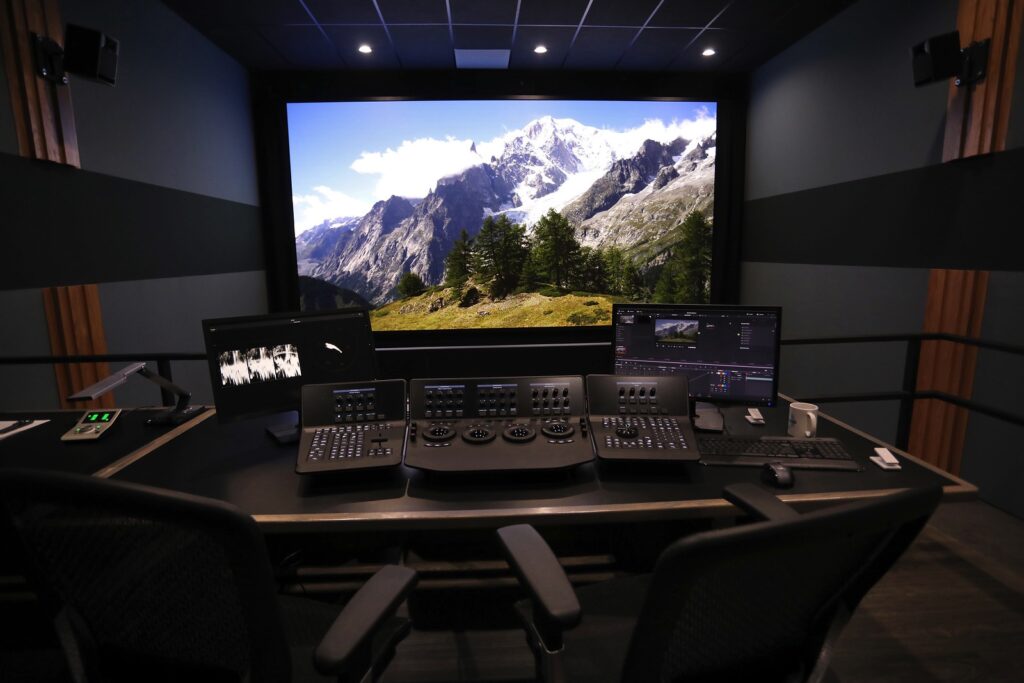
Colour correction, also known as colour grading, is the art of improving the overall look of the film by manipulating the colour palette of each scene. When shooting on location, there may have been issues with lighting and overcast weather. You may, on the other hand, want to make artistic choices with the colour of costumes or scenery.
Enter colour correction. A colour grader will amend the way a film looks, saturating certain colours, adding filters to certain scenes and improving the lighting of others – similarly to how you may edit photos at home. It’s their job to ensure the film has a similar look throughout and that scenes generally have the same aesthetic feel.
Main titles and credits.
Graphics and titles will be added next, creating the opening and closing elements of the film. Any in-film graphics are added too, such as language subtitles or location stamps. Also, don’t forget to include everyone who has been involved in your production in the film’s closing credits.